Vadzo Imaging Positions Bolt-2020MRS: 20MP NIR Drone Camera for Enhanced Night Surveillance and Perimeter Monitoring
The Bolt-2020MRS is a 20MP NIR Drone Camera, and Vadzo Imaging is positioning it for enhanced night surveillance and
Press Release Disclaimer: This is a press release distributed through the XPR Media network. It has not been independently verified by our newsroom.
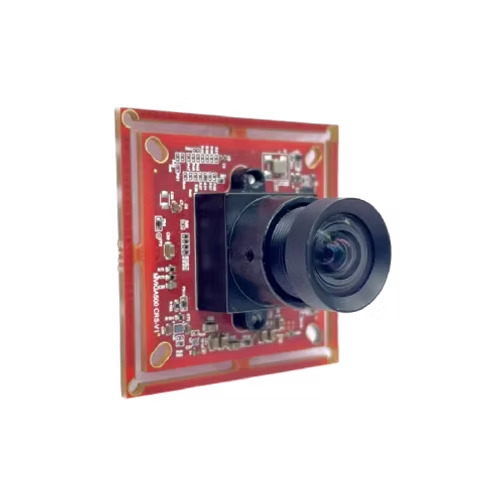

The Bolt-2020MRS is a 20MP NIR Drone Camera, and Vadzo Imaging is positioning it for enhanced night surveillance and perimeter monitoring.
FORT WORTH, TX, UNITED STATES, November 9, 2026 /EINPresswire.com/ — Vadzo Imaging, a provider of embedded vision camera products for OEMs and system integrators, today positions the Bolt-2020MRS as a 20MP NIR Drone Camera for enhanced night surveillance and perimeter monitoring. Built on the Onsemi AR2020 sensor, it combines low noise imaging, enhanced HDR, excellent near infrared response, wake on motion, and a MIPI CSI-2 interface with 2 lane and 4 lane options. Vadzo presents a 20MP Monochrome NIR MIPI Camera and a 20MP Rolling Shutter NIR MIPI Camera for UAV makers, with guidance on night exposure, near infrared illumination, and platform choice.
Why a 20MP NIR Drone Camera Needs Low Noise and Careful Exposure at Night
Night work is hard for any camera and harder for one on an aircraft. The scene is dark, so the sensor needs long exposures or high gain, and each costs something. A long exposure lets the aircraft’s motion smear the image, and high gain amplifies noise. Near infrared light helps, because many illuminators and some natural sources emit it, but the camera must respond to it, and the lens must focus it, since glass focuses infrared slightly differently from visible light.
The scene is rarely uniformly dark. Floodlights, vehicle headlamps, and gate lamps create bright spots in a dark field, and a standard exposure either clips them or loses the shadows. A perimeter patrol also spends long periods watching a quiet scene, and a platform that parks on a pad or a post between events wastes power if the camera runs at full rate all the time. The processor on board must handle 20MP frames without adding weight, so the camera interface and the module must be matched.
How a 20MP NIR Drone Camera Balances Light, Motion, and Data
The Bolt-2020MRS is built on the Onsemi AR2020, a 20MP (5120 x 3840) monochrome rolling shutter sensor with a 1/1.8 inch optical format and 1.4 micron pixels. With no color filter array, more light reaches each pixel, which helps at night, and the sensor responds in the near infrared across the 850nm and 940nm bands that most illuminators use. At 850nm the response is stronger and the source shows a faint red glow. At 940nm the source is invisible and the response is weaker. Enhanced HDR keeps bright lamps and dark ground readable in one frame.
A short calculation shows the night trade off. With 1.4 micron pixels and an example 16 millimeter lens at 40 meters, one pixel covers about 3.5 millimeters of ground. An aircraft moving at 8 meters per second travels 8 centimeters during a 10 millisecond exposure, which is about 23 pixels of blur. A 1 millisecond exposure would reduce that to about 2 pixels but gather one tenth of the light. Light from an aircraft mounted illuminator also falls off with the square of the distance, so a drone at 40 meters receives a quarter of the light that one at 20 meters does. The figures are illustrative, and they explain why night imaging favors slow flight or hovering, a steady mount, and a sensor with low noise.
Wake on motion lets the sensor rest at very low power and return to capture when the scene changes, which suits a platform that watches from a pad, a post, or a dock between patrols. The camera offers a 2 lane and a 4 lane MIPI CSI-2 interface. A 20MP frame at 8 bits per pixel is about 19.7 megabytes, so 10 frames per second needs about 1.6 gigabits per second, and the number of lanes and the lane rate decide whether the link carries it. The module connects to NVIDIA Orin NX, Orin Nano, and AGX Orin, which suit aircraft of different size and payload. Teams should confirm lane settings, frame rates, drivers, and wake timing against the product documentation.
Product Overview
The Bolt-2020MRS is a 20MP monochrome MIPI module built on the Onsemi AR2020 sensor and positioned for night surveillance and perimeter monitoring. As an AR2020 NIR MIPI CSI-2 Camera, it responds in the near infrared, and as a 20MP 850nm 940nm MIPI Camera, it covers the two bands that most illuminators use. The 4K NIR Drone MIPI Camera designation covers its 4K modes for lighter processing. The module also serves as an AR2020 Monochrome NIR MIPI Camera, a 20MP Mono NIR MIPI Camera, an AR2020 NIR Sensitive MIPI Camera, an AR2020 NIR Rolling Shutter MIPI Camera, a 20MP Monochrome Rolling Shutter MIPI Camera, a 20MP Night Vision MIPI Camera, an AR2020 NIR Drone MIPI Camera, a 4K Monochrome NIR MIPI Camera, and a 20MP NIR MIPI CSI-2 Camera for designs that need a standard MIPI interface.
Key Capabilities of the 20MP NIR Drone Camera
Key specs: 20MP (5120 x 3840) Max Resolution | Onsemi AR2020 1/1.8 inch Sensor Format | 1.4 micron Pixel | Monochrome with Rolling Shutter | 2 Lane and 4 Lane MIPI CSI-2 Interface | S-Mount (M12) Optics
Low Noise Imaging
Noise is the main limit at night. A monochrome sensor collects more light per pixel because it has no color filter array, and the sensor’s low noise design keeps the signal clean as gain rises. Cleaner frames help detection software and compress to smaller files. Where illumination can be added safely, a modest increase usually improves the image more than any camera setting.
Enhanced HDR
Floodlights, headlamps, and gate lamps create bright spots in a dark field. Enhanced HDR widens the range of brightness that one frame records, so the lamp and the ground beside it stay readable together. Teams should record real night scenes with the mode on and off and compare, including scenes with a lamp in the frame, since that is where the benefit shows most and where a standard exposure fails first.
Near Infrared Response at 850nm and 940nm
The sensor responds across the 850nm and 940nm bands. An 850nm illuminator gives a stronger signal and a faint red glow, and a 940nm illuminator is invisible and weaker, which suits covert work. Illuminators on aircraft have limited reach and weight, so range should be tested. An infrared corrected lens helps keep focus across visible and near infrared light.
Wake on Motion
Wake on motion lets the sensor rest at very low power and return to capture when the scene changes, which suits a platform that watches from a pad or a post between patrols. The motion threshold should be tuned at the real site, and the time from motion to the first usable frame should be measured on the target platform.
2 Lane and 4 Lane MIPI CSI-2 Interface
The camera offers a 2 lane and a 4 lane MIPI CSI-2 interface. The 2 lane option suits hosts with a simple camera connector and keeps wiring light, and the 4 lane option carries more data for higher frame rates at full resolution. Teams choose the option that matches the carrier board and the frame rate they need.
NVIDIA Orin NX, Orin Nano, and AGX Orin Platforms
The module connects to NVIDIA Orin NX, Orin Nano, and AGX Orin, so a team can choose a compact module for a small aircraft or a larger one for heavy models without changing the camera. As an Embedded Drone MIPI Camera, it connects straight to the processor without a bridge chip. As a 20MP NIR MIPI Camera Manufacturer, Vadzo supports lens matching, firmware customization, and enclosure design.
“Night imaging from a drone is a negotiation between light, motion, and noise. The Bolt-2020MRS was positioned to give customers a strong hand in it, with a monochrome sensor that keeps more light, a response at 850nm and 940nm, enhanced HDR for the lamps, and wake on motion for the quiet hours. We are plain about the limits. Illuminators on aircraft reach only so far, a long exposure turns motion into blur, and thermal imaging remains the better primary sensor for long range night detection. We help customers plan the lens, the illumination, and the platform.” – Alwin Vincent, Product Manager, Vadzo Imaging
Applications for Drone Night Surveillance
Night Surveillance Patrols
Night patrols look for movement and change over large areas. The Bolt-2020MRS works as a Night Surveillance Drone MIPI Camera and a UAV Night Surveillance MIPI Camera that gives detection software detailed grayscale frames under near infrared illumination, and as an Enhanced Night Surveillance MIPI Camera it keeps lamps and dark ground readable together.
Perimeter Monitoring
Perimeters need a camera that watches fences, gates, and approaches for long periods. The module serves as a Perimeter Monitoring Drone MIPI Camera and a Perimeter Security MIPI Camera, where wake on motion saves power on a parked platform. Operators remain responsible for aviation, privacy, and surveillance rules where they fly, and night operations often need specific approval, so the rules should be checked before the first flight.
Embedded Drone Integration
Payloads have tight limits on weight and power. As an Embedded Drone MIPI Camera, the module connects directly to an NVIDIA module, and it joins Vadzo’s 20MP High Resolution Camera Modules range. Teams should check weight, power, and connector retention for their airframe, and they should keep the MIPI cable short, since the camera connects straight to the processor board.
Frequently Asked Questions
Q: Why does a night camera on a drone blur more than one on the ground?
A: Vadzo Imaging explains that the aircraft moves while the sensor exposes, and night scenes need long exposures. For example, at 40 meters with a 16 millimeter lens, one pixel covers about 3.5 millimeters, so an aircraft at 8 meters per second blurs about 23 pixels in 10 milliseconds. Slow flight, hovering, a steady mount, and a low noise sensor reduce the problem. These figures are illustrative.
Q: Is 850nm or 940nm better for night illumination?
A: An 850nm illuminator gives a stronger signal and shows a faint red glow. A 940nm illuminator is invisible and weaker for the same power. The better choice depends on whether covert operation matters and on the range needed. Vadzo Imaging suggests testing both with the real illuminator, and a 20MP Monochrome NIR MIPI Camera should be tried at the working height.
Q: Can near infrared replace thermal imaging at night?
A: No. Near infrared illumination from an aircraft reaches limited distances and adds weight and power, and thermal imaging usually remains the primary sensor for long range night detection. A monochrome near infrared camera adds detail, confirmation, and close range illumination. Vadzo Imaging suggests treating it as one sensor in a layered system.
Q: What do 2 lane and 4 lane MIPI interfaces change?
A: They change how much data the camera can send to the processor. A 2 lane interface suits simple connectors and light wiring, and a 4 lane interface carries more data for higher frame rates at full resolution. A 20MP frame at 8 bits per pixel is about 19.7 megabytes, so Vadzo Imaging recommends checking the lane count and rate against the frame rate the application needs.
Q: Why should drone makers choose Vadzo Imaging as their 20MP NIR MIPI camera manufacturer?
A: Vadzo Imaging offers more than a camera module built around a capable sensor. Drone makers receive a monochrome module with strong near infrared response, enhanced HDR, wake on motion, and a MIPI link to NVIDIA modules, with candid guidance on night exposure and the limits of illumination, plus engineering support for lens selection, firmware customization, and enclosure design. Vadzo Imaging maintains evaluation kits with no minimum order requirement, so teams can test at night on their own aircraft.
Availability
The Bolt-2020MRS 20MP NIR Drone Camera, built on the Onsemi AR2020 sensor, is available now for evaluation and production orders. Evaluation kits include the camera module, an S-Mount lens, and platform documentation, with no minimum order requirement. Teams can test both illuminator bands at the working height, compare enhanced HDR on real night scenes, and confirm streaming on their own NVIDIA module before committing to a production bill of materials. Browse the full range of MIPI camera options at Vadzo’s website or contact Vadzo at support@vadzoimaging.com to request an evaluation unit or discuss OEM integration requirements.
About Vadzo Imaging
Vadzo Imaging is a global provider of embedded vision solutions and delivers high performance camera technologies and imaging platforms for applications in robotics, industrial automation, UAVs, edge AI, and medical systems. Its products are designed for seamless integration with leading embedded platforms including NVIDIA Jetson, Rockchip, Raspberry Pi, and NXP i.MX. Vadzo supports customers through hardware customization, firmware development, and module level drivers, enabling faster development and deployment of vision based systems across MIPI, USB, GigE, Wi-Fi, and SerDes camera interfaces.
Alwin Vincent
Vadzo Imaging
+1 817-678-2139
alwin@vadzoimaging.com
Legal Disclaimer:
EIN Presswire provides this news content “as is” without warranty of any kind. We do not accept any responsibility or liability
for the accuracy, content, images, videos, licenses, completeness, legality, or reliability of the information contained in this
article. If you have any complaints or copyright issues related to this article, kindly contact the author above.

Media gallery